

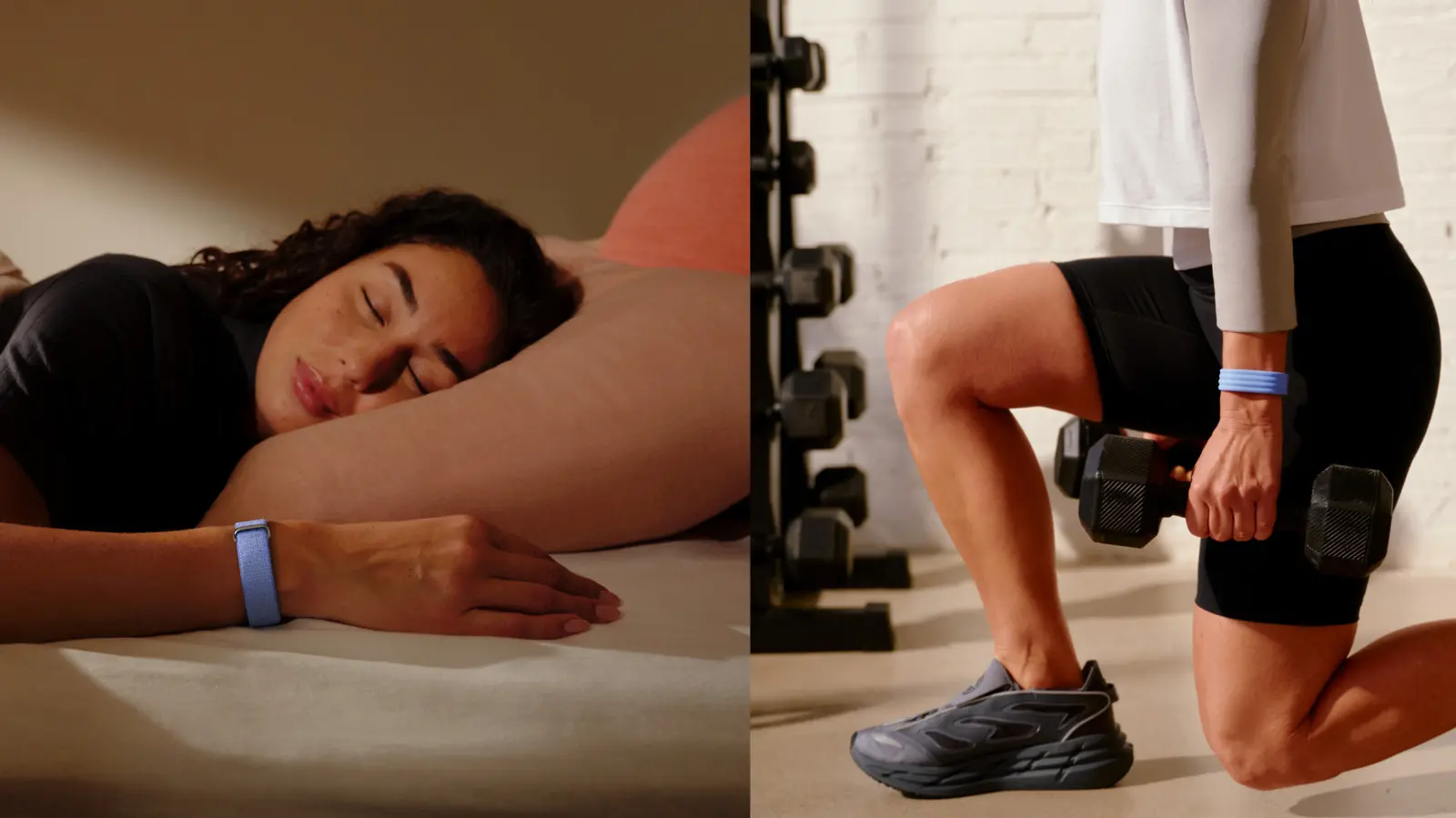
Google has officially unveiled the Fitbit Air, a screenless wearable that takes direct aim at the Whoop ecosystem. First teased in March, the Air is now available for pre-order at $100 and is scheduled to ship on May 26, 2026. This device represents a significant departure from traditional fitness trackers: it has no display, no buttons, and relies entirely on its accompanying app and a vibration motor for feedback. Instead, the Air is meant to be worn passively, collecting data around the clock.
The Fitbit Air is notable for its size and weight. According to Rishi Chandra, General Manager for Google Health, it is 25% smaller than the Fitbit Luxe and 50% smaller than the Inspire 3. The device weighs just 5.2 grams without a band and 12 grams with a band. Google claims that an independent consumer perception study conducted last year rated the Air as "more comfortable than leading competitors," citing a secure, micro-adjustable fit that makes it unobtrusive during sleep, work, or exercise.
Core Tracking and AI Integration
The Fitbit Air’s sensor suite is focused on health and fitness metrics. It continuously monitors heart rate, uses that data to log sleep stages and assign a Sleep Score, and can detect signs of atrial fibrillation (AFib) with irregular rhythm notifications. It also provides heart rate variability (HRV) insights. Activity tracking includes automatic detection for common exercises like running, walking, cycling, rowing, and elliptical use. Users can manually start sessions for 40 types of activities and add over 140 others, from archery to household chores, through the app.
What sets the Air apart from previous Fitbits is its reliance on artificial intelligence. The device is powered by "advanced new machine learning models that are 15% more accurate than our previous models," per Google. The Sleep Score has been improved to "better reflect recovery." However, the centerpiece is the Google Health Coach, a Gemini-powered interface that has been in public preview since October 2025. This AI coach creates dynamic, tailored fitness plans that adapt to real-time performance data and schedule changes. It can work with health data including Cycle Health and vital medical information, with Google emphasizing privacy and security.
Battery, Accessories, and Pricing
The Fitbit Air offers up to a week of battery life and can charge to one day of power in just five minutes, with a full charge taking 90 minutes. The charger is magnetic and bi-directional, similar to the Pixel Watch 4’s. Three wristband options are available at launch: a micro-adjustable Performance Loop Band, a sweatproof Active silicone band, and an Elevated Modern Band designed as a fashion accessory. Google has indicated that more bands, such as chest straps or necklaces, are under consideration but are not yet available.
In addition to the standard $100 model, Google has partnered with NBA star Steph Curry for a special edition priced at $130. This version features a raised interior print for increased airflow, Stephen Curry design details, and an extra water-resistant coating. Both standard and special edition purchases include three months of Google Health Premium, the subscription service that provides deeper analytics and AI features beyond the free tier.
The Fitbit Air’s launch comes at a time when the wearable market is increasingly bifurcated between multifunction smartwatches and focused health trackers. Whoop, the leader in the subscription-based, screenless wearable space, charges $30 per month for its service after a hardware purchase. Google’s $100 price point is notably lower, though it also pushes users toward the Health Premium subscription after the initial three-month trial. This mirrors the company’s strategy with the Pixel Watch and Fitbit ecosystem: affordable hardware monetized through premium software.
From a competitive standpoint, the Air also faces rivals like the Oura Ring and Ultrahuman Ring, though those are form-factor differentiators. The Air’s advantage lies in its AI integration and compatibility with existing Google Health and Fitbit ecosystems. By embedding the Gemini Health Coach directly into the experience, Google positions the Air not just as a tracker, but as a personal health advisor that can interpret data and suggest actionable changes.
Early reviews and hands-on impressions are expected to focus on comfort, accuracy of the AI models, and the usefulness of the Health Coach. The May 26 delivery date gives Google a few weeks to finalize software and ensure that the Air meets the company’s standards. With the competitive pricing and aggressive AI features, the Fitbit Air could become a significant player in the screenless wearable segment, especially among users who want in-depth health insights without the distraction of a smartwatch display.
Source: Engadget News