

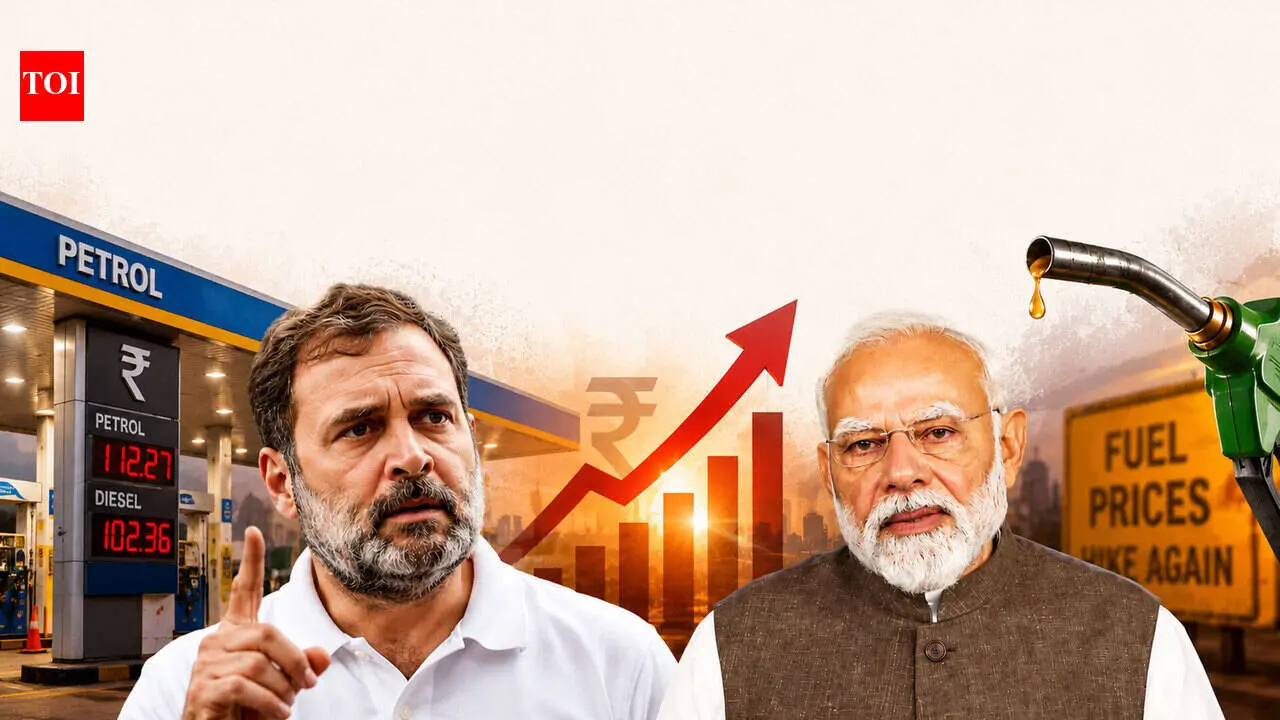
The political landscape in India heated up this weekend as Congress party leaders launched a blistering attack on Prime Minister Narendra Modi following a fresh hike in fuel prices—the third increase in just ten days. Petrol, diesel, and CNG prices have all risen, with retail rates crossing new thresholds across major cities. Congress dubbed Modi as "Mehengai Man Modi" (Inflation King Modi), alleging that the central government is deliberately fleecing citizens to boost the profits of state-owned oil marketing companies.
The latest revision, effective from Saturday, saw petrol prices increase by approximately 80 paise per litre, diesel by 70 paise, and CNG by ₹1 per kilogram in Delhi and surrounding regions. This marks the third consecutive price hike in a short span, reversing a period of relative stability that had lasted several months. The opposition argues that the timing—just ahead of key state elections—reflects the government's failure to manage inflation and its indifference to the common man's burden.
Political Fallout and Accusations
Congress spokesperson Jairam Ramesh led the charge, stating in a press conference, "Every time the international crude prices inch up, the Modi government passes the entire burden onto citizens, while cutting taxes and giving subsidies to big corporates. This is nothing but a systematic fleecing of the middle class and the poor." The party has planned protests across the country, including a nationwide 'Fuel Price Day' on Monday, where members will sit at petrol pumps to highlight the impact.
The ruling Bharatiya Janata Party (BJP) has countered by pointing to the global factors driving crude prices. Union Petroleum Minister Hardeep Singh Puri tweeted, "The Congress should stop playing politics over global supply shocks. Our government has ensured that India's fuel prices are among the most competitive in the region, and we are taking steps to insulate consumers through diplomatic channels." However, the opposition remains unconvinced, citing that domestic fuel taxes—both central and state—constitute nearly 50% of the retail price, giving the government ample room to cut taxes.
Global Crude Price Surge and Iran Tensions
The recent price hikes are directly linked to a sharp increase in global crude oil prices, which have climbed above $90 per barrel for the first time in several months. The trigger is the escalating geopolitical tension involving Iran. The United States has imposed new sanctions on Iranian oil exports, and the possibility of a broader conflict in the Middle East—affecting the Strait of Hormuz—has sent shivers through energy markets. India, which imports over 85% of its crude oil needs, is highly vulnerable to such fluctuations.
India's refining and marketing companies had been holding prices steady for over six months despite rising global costs, absorbing the difference to avoid shocking consumers. But with margins squeezed, they have now begun passing on the increases. Analysts warn that if crude prices remain elevated, further hikes are inevitable. The government has not yet indicated any immediate relief measures, such as reducing excise duty or value-added tax (VAT) by states, which could soften the blow.
Historical Context of India's Fuel Pricing
India's fuel pricing mechanism underwent a major reform in 2010, when the government deregulated petrol prices, followed by diesel in 2014. Since then, retail prices are determined by the market—based on the average international crude price of the previous 15 days, plus freight, refining costs, oil marketing company margins, and taxes. However, the central government's excise duty and state VATs often remain static even as global prices fall, preventing the benefits from reaching consumers.
During the Modi government's tenure, excise duty on petrol and diesel was repeatedly increased between 2014 and 2019, while global crude prices were low, to boost revenue. This created a situation where even when crude prices later rose, the tax component remained high. In 2021, the government did cut excise duty by ₹5 per litre for petrol and ₹10 for diesel, but that was a temporary measure. Currently, central excise on petrol stands at ₹19.90 per litre, and on diesel at ₹15.80, with state VATs adding another ₹15–25 per litre depending on the state.
Economic Impact on the Common Citizen
Higher fuel prices have a cascading effect on the economy. Transport costs increase, leading to costlier food, essential goods, and services. The poor and lower-middle-class families are disproportionately affected, as they spend a larger share of their income on basic necessities. The latest hike is expected to push inflation readings higher, complicating the Reserve Bank of India's efforts to keep consumer price inflation within the 2–6% target band.
Small business owners, particularly those reliant on road transport, have expressed frustration. Ramesh Gupta, a vegetable vendor in Delhi, said, "Every time fuel prices go up, my profit vanishes. I have to either raise prices and lose customers, or sell at a loss. The government talks about helping the poor, but this is crushing us." Such sentiments are being echoed across the country, providing fertile ground for opposition attacks.
Government's Dilemma and Policy Options
The Modi government faces a difficult balancing act. On one hand, it must ensure the financial health of oil marketing companies like Indian Oil, Bharat Petroleum, and Hindustan Petroleum, which are state-owned and crucial for energy security. On the other hand, it cannot ignore the political fallout of repeated price hikes, especially with elections in several states later this year.
Economists suggest several measures: a reduction in excise duty, which could cost the exchequer about ₹1.5 lakh crore annually; a shared burden between the centre and states through a GST-like mechanism for fuel; or a strategic release of crude oil from the Strategic Petroleum Reserve to calm markets. However, none of these options are politically easy. The government has also been exploring increased purchases from Russia, which has offered discounted crude, but logistical and payment issues remain.
Congress's 'Mehengai Man Modi' Campaign
The Congress party has seized on the fuel price issue as part of a broader narrative of rising inflation and economic mismanagement. At a rally in Mumbai, party leader Rahul Gandhi said, "The prime minister has become the champion of the super-rich. While he gives billions in tax breaks to his businessman friends, the common man pays more for petrol, cooking gas, and everything else. This is not 'acche din' (good days) but 'bure din' (bad days)." The party's social media campaign has gone viral, with hashtags like MehengaiManModi trending.
The BJP has hit back, accusing Congress of hypocrisy, noting that during the UPA era, fuel prices were often hiked by similar margins, and the Congress-led state governments also did not reduce VAT. The exchange has become increasingly bitter, dominating news cycles and overshadowing other government achievements.
Looking Ahead
As global uncertainties persist—from the Iran situation to the ongoing Russia-Ukraine conflict and OPEC+ production cuts—fuel prices in India are likely to remain volatile. The coming weeks will test the Modi government's ability to balance economic realities with political survival. The Congress party's attacks show no signs of abating, and the issue is poised to be a central theme in upcoming electoral battles.
For now, millions of Indian consumers are left to bear the burden, with no immediate respite in sight. The government has announced that it is monitoring the situation and will take appropriate action when necessary, but concrete announcements remain elusive. The next few days will reveal whether the government opts for a tactical tax cut or continues to weather the storm.
Source: The Times of India News