

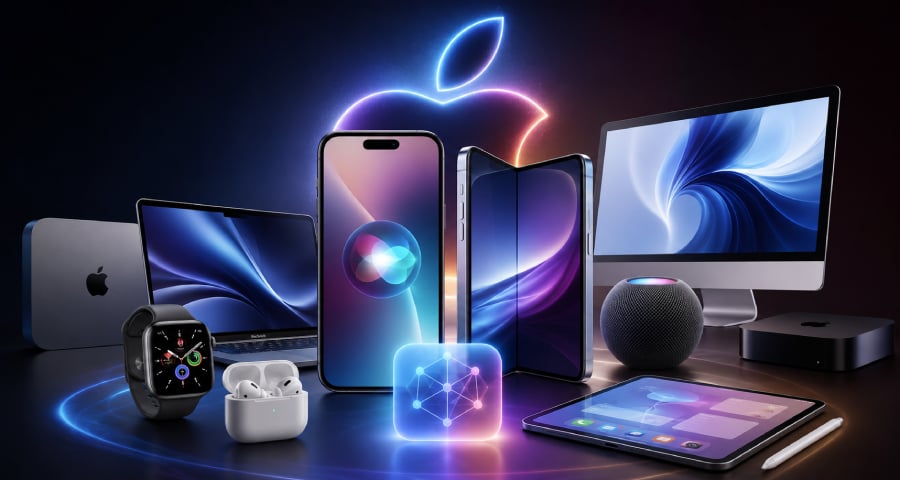
WWDC 2026: Apple’s AI Pivot Takes Center Stage
Apple’s next Worldwide Developers Conference could be a make-or-break moment for Siri. The company will hold its 2026 WWDC from June 8 to June 12, with the keynote set for Monday morning. Apple is expected to preview iOS 27, iPadOS 27, macOS 27, watchOS 27, tvOS 27, and visionOS 27. While the entire software lineup will see updates, the biggest attention will likely fall on its long-delayed AI plans.
For Apple, the challenge is bigger than adding chatbot features. WWDC 2026 may show whether Siri can become a serious AI assistant across the company’s devices, or whether Apple is still playing catch-up against Google Assistant, Amazon Alexa, and the latest generative AI models from OpenAI, Google, and Anthropic.
This preview covers all major rumored features—from Siri 2.0 to a more open AI ecosystem, to macOS refinements and hardware whispers—giving readers a comprehensive look at what insiders expect from Apple’s biggest software event of the year.
iOS 27: Siri Finally Gets Its AI Upgrade
The biggest spotlight is on iOS 27, which is expected to define Apple’s software direction for the next generation of iPhones. Across multiple reports, iOS 27 is expected to introduce a much more capable Siri, with Apple reportedly preparing a long-delayed Siri 2.0 experience. The upgrade is shaping up to feel closer to a chatbot than the voice assistant users have known for years, with a new look and more natural interactions.
The new Siri is rumored to include several key capabilities. First, personal context awareness would allow Siri to recall past conversations and make recommendations based on history—a feature long available on rivals. Second, on-screen understanding would let Siri act on what’s currently displayed on the user’s screen, from text to images. Third, deeper app control would enable cross-app actions like sharing ETAs from Maps to Messages or sending content from Notes to Mail without manual intervention.
Some leaks even suggest a standalone Siri interface and a more expressive visual design that reacts dynamically when it’s active. This would replace the familiar Siri waveform with a more animated, context-aware interface. Apple is reportedly testing a chatbot-style Siri app experience, potentially turning the assistant into a full conversational tool rather than just a command system. Such a change would align Siri more closely with what users have come to expect from ChatGPT, Google Gemini, or Claude.
A Brief History of Siri’s Delays
Apple first announced its intention to overhaul Siri at WWDC 2024 under the banner of “Apple Intelligence.” However, many promised features—including personal context awareness, on-screen understanding, and deeper app integration—were repeatedly pushed back. By early 2026, these features still had not shipped to users. WWDC 2026 now appears to be the moment Apple finally delivers on those promises. The stakes are high: Siri’s market share and user satisfaction have declined relative to competitors, and third-party voice assistant usage on iPhone has grown as users seek more powerful alternatives.
Beyond the assistant itself, iOS 27 is expected to include a refined Liquid Glass design language that debuted in iOS 26. While not a visual overhaul, Apple plans to clean up interface elements for better readability and consistency. Reports indicate the software may also bring stability and performance improvements, acting as a “cleanup release” before a more radical redesign in a later version.
A More Open AI Ecosystem on iPhone
Beyond Siri itself, Apple may be preparing a broader shift in how AI works on iPhones. Tom’s Guide and other outlets suggest Apple could allow users to choose among different AI models via an extension-style system. This would let third-party assistants integrate more deeply with Apple Intelligence features like Writing Tools and Image Playground. If accurate, that would mark a notable shift away from Apple’s tightly controlled ecosystem approach, which has traditionally favored first-party services.
Such a move could open the door for partnerships with companies like Google (for Gemini) or OpenAI (for GPT) to power specific tasks within iOS, while still maintaining Apple’s privacy-focused local processing for basic functions. This model would echo what Apple already does with default browser and email choices, allowing users to pick preferred AI assistants on a system level.
Apple’s Xcode 26 beta already supports GPT-5 and Claude, hinting at deeper developer integration with outside models. The same trend may extend to consumer-facing features, giving iPhone users more flexibility than ever before.
iOS 27 Features Spreading Across Apple Devices
While iOS will lead the charge, many changes will extend to iPadOS and macOS 27 as well, keeping Apple’s ecosystem closely aligned. Other rumored upgrades include AI-powered photo editing features such as “Enhance,” “Extend,” and “Reframe.” These would allow users to automatically improve composition, extend image backgrounds using generative fill, and reframe photos with intelligent cropping—all on-device for privacy.
Wallet upgrades are also expected: users will be able to create digital passes from QR codes directly within the Wallet app, turning paper tickets and loyalty cards into digital counterparts with a simple scan. Apple is also working on a smarter autocorrect feature that suggests rewrites and alternative wording in real-time, building on the autocorrect improvements introduced in iOS 16.
Additionally, Apple is reportedly refining its Liquid Glass design language across platforms. iOS 27, iPadOS 27, and macOS 27 may act as cleanup releases focused on stability and performance rather than a visual overhaul, while still polishing interface elements like menu transparency and interaction feedback.
macOS 27: Subtle Redesign and Productivity Tweaks
On the Mac side, Apple isn’t expected to reinvent the wheel, but it may smooth out some rough edges. MacRumors reports that macOS 27 will feature a “slight redesign” aimed at improving readability issues introduced by the Liquid Glass interface. Transparency and shadow effects, which have made text-heavy areas harder to read in some cases, are expected to be adjusted. This includes refinements to the menu bar, Finder windows, and notification center to reduce visual noise while retaining the modern look.
A new Safari feature called “Organize Tabs” is also rumored to automatically group tabs based on user behavior or preferences. For example, tabs related to work, shopping, or research could be sorted into logical groups, making it easier to manage dozens of open pages. This feature would complement Safari’s existing Tab Groups and Shared Tab Groups introduced in earlier versions. Safari may also gain improved Privacy Preserving Ad Attribution and a redesigned start page with AI-curated suggestions.
Productivity improvements expected across macOS include a revamped Quick Look that supports real-time collaboration previews, enhanced Stage Manager with customizable window layouts, and deeper integration of Shortcuts with third-party applications. Apple is also rumored to be working on a system-wide “Mentions” feature that allows users to tag people with a simple @ symbol across most apps, similar to collaboration tools like Slack or Notion.
watchOS and Ecosystem-Wide Updates
watchOS 27 is expected to be more incremental but still notable. New watch faces are rumored, including a variation of the Modular Ultra design that offers even more complications and customization. Health tracking may receive updates focused on sleep apnea detection improvements, mental wellness logging, and optional blood glucose monitoring integration (pending regulatory approval). The Fitness+ service may introduce AI-generated workout suggestions based on user history, time of day, and recovery status.
Across the ecosystem, Apple is expected to align iOS, iPadOS, and macOS more closely, especially in AI features and app behavior. Some reports also suggest groundwork is being laid for future devices like the iPhone Ultra, which would require software optimized for split-screen and flexible layouts. There are even whispers of a foldable device that could debut as early as 2027, with software features ready in iOS 27 to support a new form factor.
Hardware Rumors Still Hanging Over WWDC
While WWDC is mostly software-focused, Apple sometimes uses it to tease hardware. This year, speculation is swirling around new Macs powered by next-generation chips like the M5 family, though there’s no confirmation they will appear on stage. The M5 chip is expected to bring significant performance and efficiency gains, particularly in machine learning tasks, which would naturally pair with the advanced AI features coming in macOS 27.
There is also persistent talk of a new Mac Pro with an extreme version of the M5 chip, targeting professional users who need maximum compute power for video editing, 3D rendering, and AI model training. The MacBook Air could receive a minor refresh with the M4 chip still current, but a transition to M5 may not occur until later in the year.
Some analysts believe Apple may show a preview of the rumored iPhone Ultra or a new Apple TV hardware, but most expect concrete announcements later in the year, especially around the iPhone 18 lineup and the company’s first foldable device. WWDC 2026 remains first and foremost a software event, but the hardware rumors add an extra layer of anticipation.
WWDC 2026 will be a hybrid event, kicking off with the keynote on Monday morning. Developers and analysts expect a packed week of sessions, labs, and announcements. While some advanced AI features might not ship until later in the autumn, the June preview will set the tone for Apple’s ecosystem for the next year. More concrete hardware announcements are expected later in the year instead, especially around the iPhone 18 lineup and Apple’s rumored foldable device.
Source: TechRepublic News