

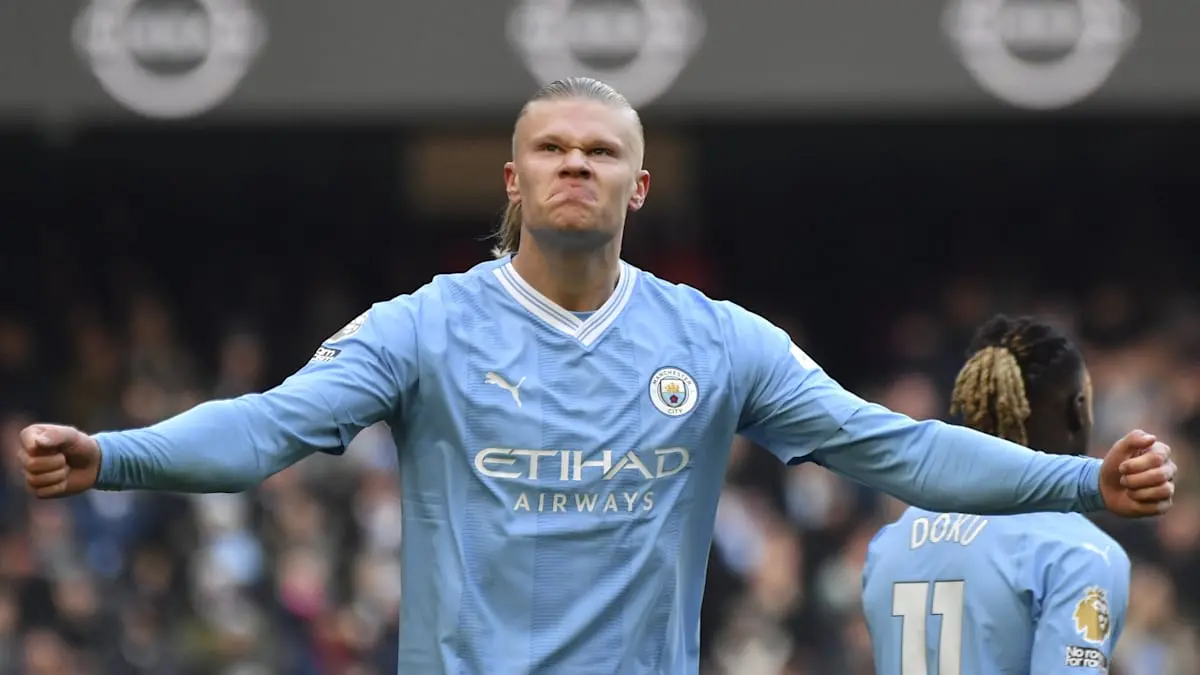
Lionel Messi was named the FIFA Best Men's Player for 2023 on Monday night in London, a decision that has divided the football world. The Argentine superstar claimed the award for the eighth time in his career, finishing ahead of Manchester City's Erling Haaland and Paris Saint-Germain's Kylian Mbappé. The outcome was particularly controversial because Haaland had a stunning season, winning the treble (Premier League, FA Cup, and UEFA Champions League) with Manchester City, while Messi's performances for Paris Saint-Germain and Inter Miami were less dominant.
The Voting System: Why It's Complicated
The FIFA Best award uses a unique voting system that combines four groups: national team captains, national team coaches, selected journalists from each FIFA member country, and an online fan vote. Each group has equal weight, and their votes are converted into scoring points. The top player in each category receives 13 scoring points, the second 11, then 9, 8, 7, and so on down to 1 point for 11th place. This system ensures that no single group dominates. However, the fan vote often tilts the scales toward players with massive global followings, like Messi.
In 2023, the raw points from fans heavily favored Messi, as more than a million people participated in the online poll. When combined with the other groups, Messi and Haaland both ended up with 48 scoring points, creating a tie. According to FIFA's statutes, ties are broken by the number of five-point votes from the national team captains. Here, Messi received 107 five-point votes to Haaland's 64, giving him the victory. Without the fan vote, Haaland would have won comfortably, with 37 scoring points to Messi's 35, and a huge advantage in raw points (1,827 to 1,468).
Why Messi's Win Stirs Controversy
Critics argue that Messi's selection undermines the principle of rewarding the best individual and team performance in a given season. Haaland scored 52 goals in all competitions for Manchester City, including 12 in the Champions League, and was instrumental in his team's historic treble. He also broke numerous Premier League records. Messi, on the other hand, had a quieter club season, winning the Ligue 1 title with PSG and the Leagues Cup with Inter Miami. His strongest argument for the award came from leading Argentina to the 2022 World Cup victory, but that tournament took place in December 2022, technically outside the voting period for the 2023 FIFA Best award (August 1, 2022, to July 31, 2023). Many believe the World Cup win still influenced voters, especially national team captains and coaches who value international success highly.
How the Votes Were Cast
The release of the full voting breakdown revealed some intriguing choices. Messi himself voted for Haaland as his first choice, followed by Kylian Mbappé and Neymar. Erling Haaland's own vote remains unknown as players are allowed to vote but not for themselves. Manchester City's Ilkay Gündogan, captain of Germany, gave Haaland five points, then Messi three, and Rodri one. German national coach Julian Nagelsmann placed Mbappé first, Gündogan second, and Haaland third. French captain Kylian Mbappé voted for Messi first, then Haaland, and Mohamed Salah. England's Harry Kane gave his five points to Messi, as did many other captains from around the world. The media representative from Germany, Kicker editor Georg Holzner, chose Haaland first, Messi second, and Mbappé third.
The fan vote, which carried equal weight, swung heavily toward Messi, as expected given his enormous global popularity, especially in South America, Asia, and Africa. This demonstrated the power of the online component: almost a million fans voted, and the final ranking in the fan category saw Messi with 13 scoring points, Haaland with 11, and Mbappé with 9. Without those extra points, Haaland would have won the overall title.
Reactions from Around the World
The decision was met with astonishment and criticism in the media. Spanish newspaper Diario AS called it "the most controversial The Best award in history." Norwegian daily Aftenposten wrote bluntly: "Lionel Messi is no longer among the ten best football players in the world. Erling Haaland is." In England, many pundits expressed confusion, noting that Haaland's season was statistically superior. Even in Argentina, some journalists questioned the fairness of the award, though most celebrated Messi's continued dominance. The ceremony itself in London saw audible gasps when the winner was announced, with many in the audience expecting Haaland to take the prize.
A Look Back at Messi's Record
This eighth FIFA Best award (previously known as FIFA World Player of the Year and later merged with Ballon d'Or for a few years) cements Messi's status as the most decorated player in the history of the sport. He won the award in 2009, 2010, 2011, 2012, 2015, 2019, 2022, and now 2023. His longevity is unmatched, but this latest win is perhaps the most debated. Messi's legacy includes seven Ballon d'Or titles (the last in 2021) and a World Cup winner's medal. At 36, he continues to play for Inter Miami in Major League Soccer, where he has already made a significant impact on the league's popularity.
Haaland's Incredible Season
Erling Haaland, 23, is widely regarded as the future of football. His move to Manchester City in 2022 transformed the team, giving them a lethal focal point in attack. He scored 52 goals in 53 appearances in his debut season, breaking the Premier League single-season scoring record with 36 goals. He also won the Champions League Golden Boot with 12 goals and was named the Premier League Player of the Season. Many felt that winning the treble was the ultimate team achievement, and Haaland was the driving force. His exclusion from the FIFA Best award was seen as a snub, especially since the voting period covered exactly his most successful months.
What This Means for Future Awards
The controversy raises questions about the weighting of the fan vote and the need for a clearer definition of the voting period. FIFA has defended the system, stating that it ensures a democratic representation of the global football community. But critics argue that players like Haaland are penalized for not having the same kind of international fame or social media following. The inclusion of the World Cup result, which happened before the voting period but was still fresh in voters' minds, also muddies the waters. Some have called for a stricter separation of club and international performance periods. Others suggest that the voting should be limited to coaches, captains, and media, as with the Ballon d'Or, to reduce the influence of fandom.
Comparisons to Other Controversial Wins
This is not the first time the FIFA Best award has sparked debate. In 2013, Franck Ribéry suffered a similar fate after winning the treble with Bayern Munich, only to see Cristiano Ronaldo win the prize. In 2010, Wesley Sneijder was overlooked despite winning the Champions League and reaching the World Cup final, as Messi took the award. The pattern suggests that individual brilliance and World Cup success often trump purely statistical club seasons. However, the 2023 case is distinct because of the clear numerical disparity between Haaland's goals and Messi's club form. Many believe that Messi's eighth award is a recognition of his overall career rather than his performance in the voting period.
The Role of the Captain's Vote
The tie-breaking mechanism based on captains' first-place votes has also come under scrutiny. National team captains may have various biases: loyalty to former teammates, admiration for a player's legacy, or pressure from their national federations. In Messi's case, his widespread respect among colleagues likely gave him the edge. Some captains voted based on the World Cup victory, even though that was not officially within the voting window. The FIFA rules specify that the period is from August to July, but the World Cup final was on December 18, 2022, well within the range. So technically, the World Cup was a valid factor. Still, the timing left a sour taste for those who felt Haaland's entire season was stronger.
What's Next for Both Players
As the 2023-24 season progresses, both Messi and Haaland continue to perform. Messi has been a sensation in MLS, leading Inter Miami to a Leagues Cup title and raising the profile of soccer in the United States. Haaland, however, has picked up where he left off, scoring goals for fun and strengthening his claim as the world's best striker. The debate over who should have won the FIFA Best award will likely continue until the next edition, when new contenders emerge. For now, the trophy sits in Messi's cabinet, further enshrining his legend, but the controversy highlights the imperfection of any voting system when it comes to comparing players from different contexts.
Source: DIE WELT News