

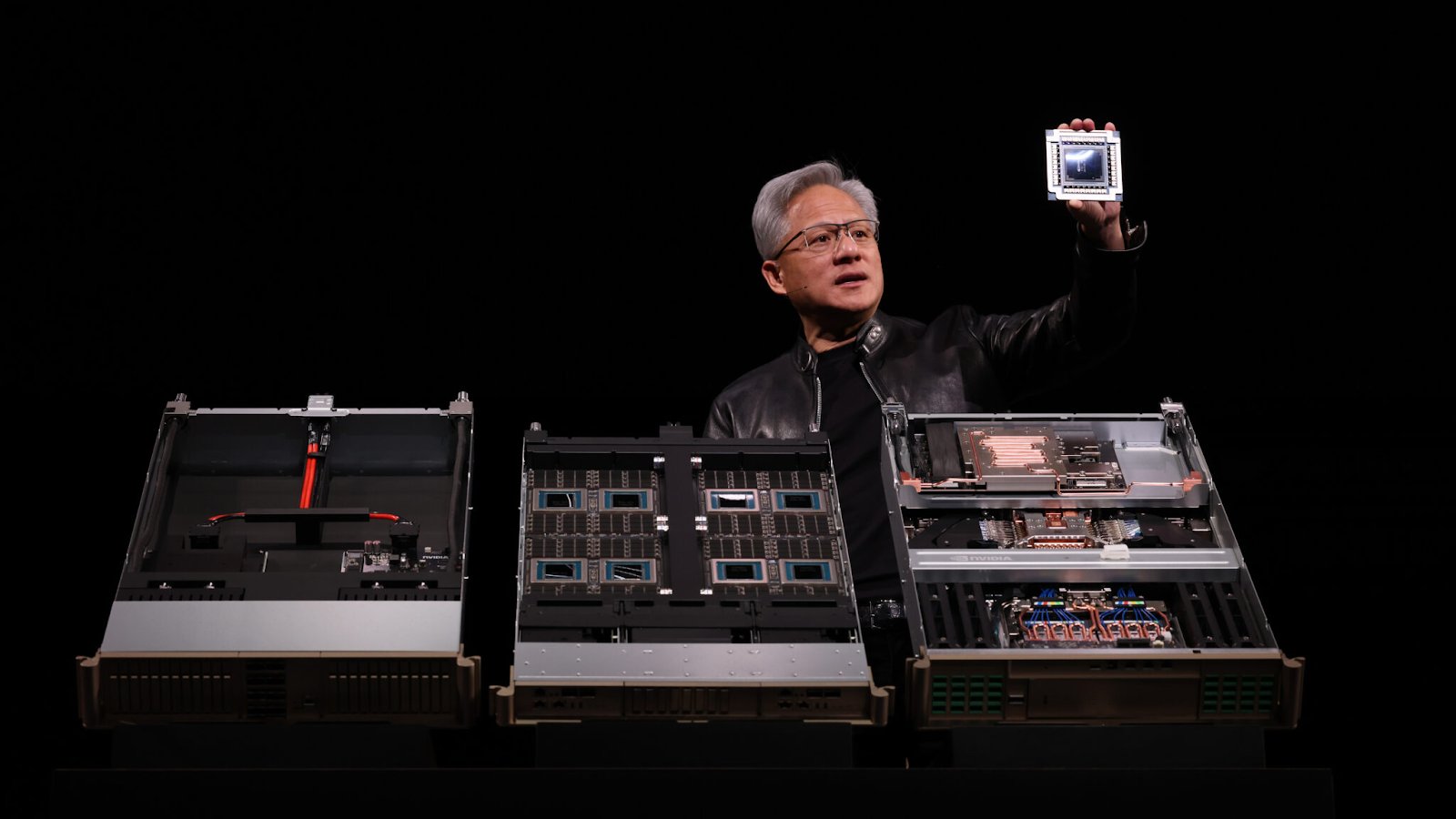
The United States has granted export licenses allowing approximately 10 Chinese technology companies — including Alibaba, Tencent, ByteDance, and JD.com — to purchase Nvidia's advanced H200 artificial intelligence chips. However, according to recent reports, not a single chip has actually been delivered, leaving one of the most closely watched AI trade deals in a state of paralysis between Washington's security rules and Beijing's mutual distrust.
The approvals represent one of the most significant openings for advanced AI chip sales to China since the US began tightening semiconductor export controls several years ago. Yet despite the green light from Washington, shipments remain stalled as both governments impose conflicting demands that have created a regulatory impasse. Nvidia's H200 chips, which are designed for high-performance AI workloads, are considered less powerful than the company's most advanced offerings but still represent a major leap in computing capability for Chinese firms racing to develop their own AI models.
Regulatory Hurdles on Both Sides
The primary obstacle preventing the H200 from shipping is a complex, contradictory web of regulatory demands from both Washington and Beijing. On the American side, regulations enacted earlier this year require Chinese buyers to explicitly demonstrate that they have implemented sufficient security procedures and to provide binding guarantees that the chips will not be diverted to military applications. Nvidia itself must also certify that it maintains adequate inventory within the United States before any shipments can be made abroad.
Furthermore, the current administration negotiated an unusual financial workaround to comply with US law. Because federal statutes prevent the direct imposition of export fees, the arrangement requires that the chips physically pass through US territory so the government can collect a 25% share of sales revenue. This specific logistical requirement has triggered deep anxiety within the Chinese government. According to sources familiar with the discussions, officials in Beijing are deeply uneasy over the potential for tampering or hidden vulnerabilities that could be introduced while the hardware sits on US soil during the required transit.
The Chinese government has not yet accepted the terms, leaving Nvidia in a holding pattern. For Beijing, the fear is that allowing US officials to physically handle the chips before final delivery could create backdoor access points for intelligence gathering or sabotage. These concerns are amplified by the broader context of the US-China technology war, which has seen both sides impose restrictions on everything from semiconductor equipment to cloud computing services.
Jensen Huang Joins Trump's Beijing Trip
Against this backdrop, Nvidia CEO Jensen Huang has joined President Donald Trump on a high-profile diplomatic trip to Beijing for talks with Chinese President Xi Jinping. Huang was reportedly not originally scheduled to be part of the White House delegation but received a last-minute invitation from Trump. The president personally picked him up during a stop in Alaska while traveling to the summit. This development has fueled speculation that Nvidia is seeking a breakthrough that could finally unlock the delayed H200 sales.
The presence of Huang — one of the most prominent figures in the global AI industry — on such a sensitive diplomatic mission underscores the high stakes involved. Nvidia has been caught in the crossfire of US-China tensions for years, with its stock price and revenue heavily dependent on access to the Chinese market. The company previously designed a less powerful chip, the A800, specifically to comply with US export rules, but even that was later restricted. The H200 is seen as a potential compromise product that could satisfy US security concerns while still offering meaningful performance for Chinese AI developers.
The Double Bind of US-China Tech Policy
The stalled H200 sales highlight a fundamental dilemma for both governments. US policymakers want to prevent China from gaining access to cutting-edge AI technology that could be used for military purposes, but they also recognize that a complete ban on sales to China would hurt American companies like Nvidia and potentially accelerate Chinese efforts to develop their own semiconductors. The current approach — a case-by-case review framework for the H200 rather than a blanket ban — is an attempt to balance these competing objectives.
However, this middle path has satisfied neither side. Hardliners in Washington argue that even limited sales will erode the US technological advantage. China hawks reject the administration's baseline theory that allowing some commercial chip sales will successfully prevent Chinese tech firms from narrowing the gap with the West. They point to the rapid progress of Chinese companies like Huawei in developing their own AI chips as evidence that export controls need to be stricter, not looser.
One national security analyst expressed deep skepticism about the current strategy, noting that any deal allowing Nvidia to sell more chips to China means fewer chips for US firms and a smaller American lead in AI. The argument that Nvidia's corporate interests should be prioritized over national security has become a flashpoint in Washington policy debates.
Historical Context of Semiconductor Export Controls
The current standoff is the latest chapter in a long history of US efforts to control the flow of advanced technology to China. The earliest restrictions date back to the Cold War era, when the Coordinating Committee for Multilateral Export Controls (CoCom) limited sales to Communist countries. After the Cold War, controls were relaxed, but concerns about China's military modernization led to renewed restrictions in the 1990s and 2000s.
The modern era of semiconductor export controls began in earnest when the US restricted sales of advanced chips to Huawei in 2019. Those measures were expanded in subsequent years to cover a wider range of semiconductor equipment and design software. The Biden administration further tightened controls in 2022 and 2023, targeting AI chips specifically. The Trump administration's current approach represents an attempt to fine-tune those controls, allowing some sales while maintaining strict oversight.
Nvidia has been at the center of these debates because its chips are essential for training large language models and other advanced AI systems. The company's revenue from China has fluctuated wildly as export rules have changed. In the past fiscal year, sales to China accounted for approximately 20% of Nvidia's data center revenue, down from much higher levels before the restrictions took effect.
Implications for the AI Industry
The resolution of the H200 standoff will have significant implications for the global AI industry. If the shipments eventually go through, Chinese companies will gain access to hardware that could accelerate their AI development efforts. Alibaba, Tencent, and ByteDance are already among the world's largest operators of AI infrastructure, and access to H200 chips would allow them to train larger models and deploy more sophisticated applications.
If the deal falls through, Chinese firms will be forced to rely on domestically produced alternatives, which are generally less powerful and less efficient. This could slow the pace of AI innovation in China, but it could also stimulate investment in local chip design and manufacturing. Companies like Huawei are already making progress with their Ascend series of AI processors, and continued restrictions on US chips could accelerate that trend.
For Nvidia, the stakes are equally high. The company has invested heavily in designing chips that comply with US export rules while still being attractive to Chinese buyers. If the H200 cannot be sold, Nvidia may need to develop yet another compromise product or face a permanent reduction in its addressable market. The company's stock price has been volatile in response to export control news, reflecting investor uncertainty about the long-term outlook for its China business.
For a deeper look at Nvidia's broader AI ambitions beyond the China chip standoff, including the company's biggest announcements from its recent developer conference, industry observers are closely watching how the company navigates its dual role as both a leader in AI hardware and a geopolitical pawn in US-China relations.
Source: TechRepublic News