

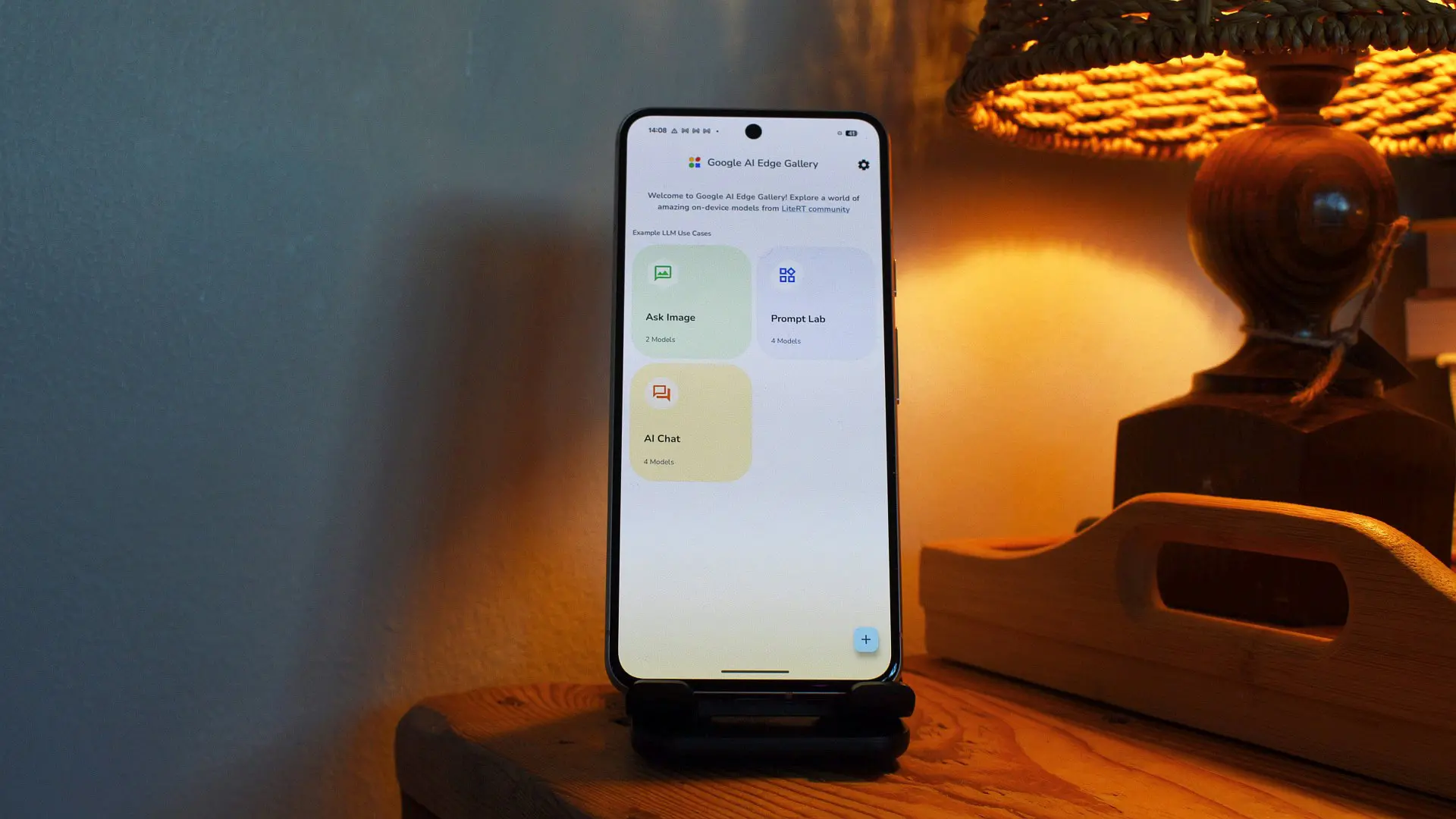
Google's AI Edge Gallery app has been a standout tool for users who value privacy and want to run artificial intelligence models directly on their smartphones. By eliminating the need for cloud processing, this app ensures that sensitive data never leaves the device. At the recent I/O developer conference, Google announced three major enhancements that take the app to the next level: Model Context Protocol (MCP) support, proactive notification reminders, and persistent chat history.
Model Context Protocol (MCP) integration
The most technically significant addition is support for the Model Context Protocol, an open-source standard that allows on-device AI models to interact with other applications and services. MCP servers can be self-hosted on a home computer or run in the cloud, providing a standardized interface for the AI to fetch data or perform actions. For example, by connecting AI Edge Gallery to a Workspace MCP server, the app can check your Google Calendar for upcoming events, scan Gmail for bills or ticket confirmations, or even pull information from Google Maps about nearby points of interest and travel times. A web MCP server enables the chatbot to access URLs and retrieve news articles or documentation. This opens up a wide range of real-world use cases without compromising data privacy, as the processing remains on-device.
Proactive notification reminders
Another major feature is the introduction of notification-based reminders. Users can instruct the AI agent to create proactive nudges, such as "Remind me to log my mood every night at 10 PM." The app then schedules a local notification that, when tapped, opens directly to the relevant tool and starts an interactive session with the Gemma 4 model. This enables daily routines like mood tracking, wellness check-ins, or morning digests that provide a quick overview of your calendar and schedule before heading out. The reminder system runs entirely on-device, so no data is sent to external servers, preserving user privacy.
Persistent chat history
The third update focuses on continuity. AI Edge Gallery now supports persistent chat history, allowing users to pick up conversations exactly where they left off, including any previously generated images or media. This is particularly useful for ongoing tasks like brainstorming, project planning, or in-depth research. Previously, each session was isolated, but now users can maintain long-term context across multiple interactions, making the app feel more like a true personal assistant.
Background and significance
On-device AI is becoming increasingly important as concerns about data privacy and cloud reliance grow. Traditional cloud-based AI services require sending user data to remote servers for processing, which can be a privacy risk. Apps like AI Edge Gallery address this by running models locally, using Google's Gemma family of lightweight models optimized for mobile hardware. The addition of MCP support is especially impactful because it bridges the gap between on-device intelligence and real-world applications. Instead of being limited to simple question-answering, the AI can now interact with other software ecosystems in a structured way.
Notification reminders add a layer of proactivity that typical chatbots lack. Most conversational AI agents are reactive—they wait for user input. With scheduled nudges, the app becomes a tool for habit formation and daily planning. Persistent chat history further enhances usability, reducing friction for returning users.
These improvements come at a time when the mobile AI landscape is evolving rapidly. Competitors like Apple and Samsung are also investing in on-device AI, but Google's approach with an open protocol like MCP gives developers more flexibility to create custom integrations. The ability to host MCP servers locally means that advanced users can build sophisticated automations without relying on third-party cloud services.
For average users, the updates make AI Edge Gallery a more compelling alternative to cloud-based assistants like Google Assistant or ChatGPT. While those services offer convenience, they require an internet connection and often collect usage data. Edge Gallery's on-device processing ensures that even sensitive information—like medical data, financial details, or personal emails—remains private. The MCP feature extends this privacy by allowing users to choose where their data goes (if anywhere at all) when connecting to external services.
Developers will also benefit from the new features. The MCP protocol is well-documented and can be implemented with a variety of programming languages. This opens the door for third-party integrations, from home automation systems to specialized business tools. As the ecosystem grows, the app's utility will only increase.
In summary, Google's latest updates to AI Edge Gallery represent a significant step forward for on-device AI. By adding MCP support, proactive notifications, and persistent chat history, the app now offers a level of functionality that rivals many cloud-based solutions while maintaining the privacy and security of local processing. Users who have been hesitant to try on-device AI may now find it practical enough for daily use, and existing users will appreciate the enhanced capabilities.
Source: Android Authority News