

The world of tennis often pits players against each other in fierce rivalries, but off the court, a different kind of connection emerges—one of mutual respect and emotional resonance. Few moments in recent memory have captured this as vividly as the aftermath of the 2021 US Open men's final. Novak Djokovic, standing on the brink of history, ended his campaign in tears after losing to Daniil Medvedev. The image of the Serbian champion weeping during the final changeover struck a chord with millions, including one unexpected fan: Iga Swiatek.
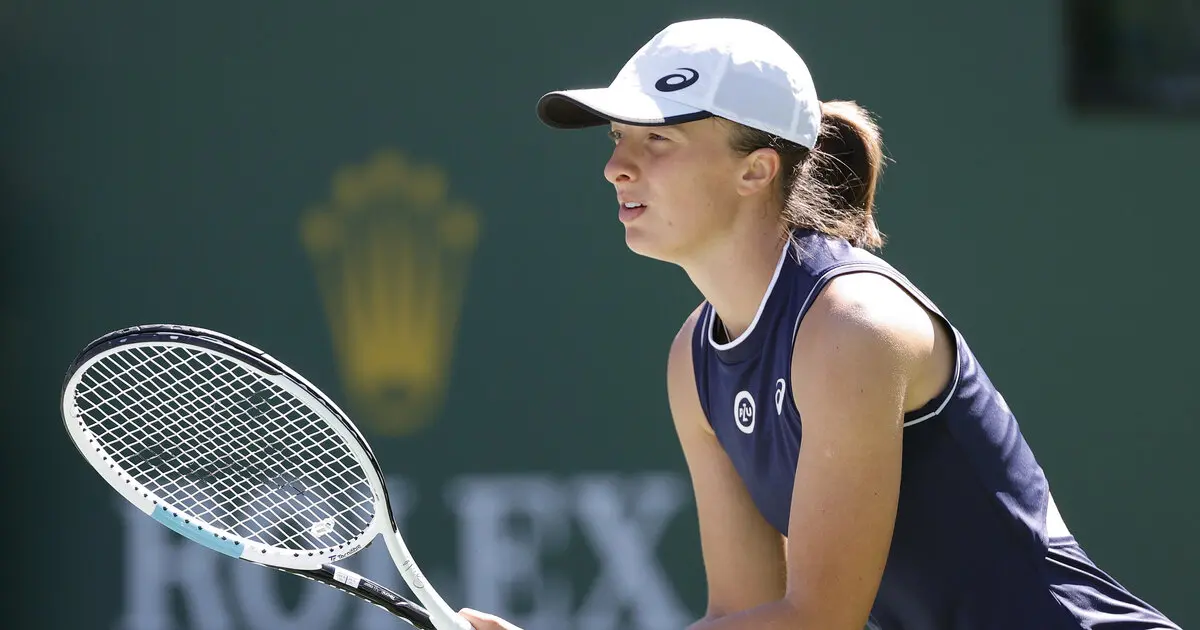
Swiatek, a Polish tennis sensation and a self-proclaimed devoted admirer of Rafael Nadal, admitted in a press conference at the WTA-1000 event in Indian Wells that she had cried while watching Djokovic's defeat. "I was of the opinion that he deserved this success, and that if there is someone who can achieve it, it is him," she said. "I cried when he lost the US Open final, but yes, since my childhood I have always been on Team Rafa." Her confession highlights the fine line between fandom and recognition of greatness—a line that even the most passionate Nadal supporter can cross when confronted with sporting history.
Swiatek's Emotional Admission
Swiatek's words came as a surprise to many in the tennis community. Known for her unwavering support of Rafael Nadal, she has often spoken about how the Spanish legend inspired her own game. Yet here she was, openly acknowledging the emotional weight of Novak Djokovic's quest. "It's not that I changed sides," she clarified. "I can still love Rafa's game and appreciate what Novak was trying to do. It was something bigger than rivalry." Her tears, she explained, were a response to the immense pressure Djokovic carried—to become the first man since Rod Laver in 1969 to win all four Grand Slams in a calendar year, and the first in the Open Era to achieve that feat.
The 2021 US Open final was not just a tennis match; it was a cultural moment. Djokovic had dominated the season, winning the Australian Open, French Open, and Wimbledon. The tennis world watched as he moved closer to the elusive Grand Slam. The crowd at Arthur Ashe Stadium, often critical of Djokovic, turned into a wave of support. For the first time in his career, he felt the overwhelming embrace of a New York audience. But the pressure was immense. Djokovic later described the experience as "one of the most emotional matches" of his life. His tears were not just for the loss but for the raw emotion of being accepted.
Swiatek, who is known for her own emotional displays on court, found herself empathizing deeply with that moment. "I know what it's like to feel the weight of expectations," she said in a later interview. "Maybe not to that degree, but I understood his struggle." The Polish player, who won the French Open in 2020 at the age of 19, has quickly become one of the most respected figures on the WTA Tour. Her maturity and insight are often praised, and her comments about Djokovic further cemented that reputation.
The Historic Context of Djokovic's Chase
To understand why Swiatek's admission resonated so strongly, one must look at the historic magnitude of what Djokovic was attempting. The Calendar Grand Slam—winning all four majors in a single year—has only been achieved by two men in tennis history: Don Budge in 1938 and Rod Laver twice (1962 and 1969). Steffi Graf and Margaret Court did it in women's tennis, but in the modern men's game, the feat seemed nearly impossible. The depth of competition, the different surfaces, and the physical toll make it a Herculean task.
Djokovic came within three sets of that immortality. Medvedev, playing the match of his life, dismantled Djokovic's game with relentless consistency. The final score—6-4, 6-4, 6-4—did not reflect the drama. Djokovic saved break points, fought for every point, but ultimately fell short. After the match, he spoke of the support he received. "I felt something I never felt in my life. The crowd made me feel welcome, and that made me emotional. It was hard to hold back."
Swiatek's tears, she said, were partly a reaction to seeing that vulnerability. "He is human. He has always tried so hard to be loved, and in that moment, he got it. And then he lost. It's heartbreaking." Her perspective offered a glimpse into the psychology of a champion recognizing another champion's struggle.
Swiatek's Own Journey and Nadal's Influence
Iga Swiatek's path to the top of women's tennis is itself a story of determination. Born in Warsaw in 2001, she started playing tennis at the age of six. Her father, an Olympic rower, and her mother, a dentist, supported her athletic pursuits. Swiatek rose to prominence in 2020 when she won the French Open without losing a set, defeating Sofia Kenin in the final. Her game, characterized by heavy topspin and aggressive baseline play, drew immediate comparisons to Rafael Nadal—her idol.
"Rafa is my inspiration," Swiatek has said repeatedly. "His fighting spirit, his humility, his work ethic—I try to emulate that." The admiration is mutual; Nadal has praised Swiatek's game and mentality. Yet, Swiatek's ability to separate fandom from sportsmanship is a mark of her maturity. "I can be a fan and also respect my opponent's achievements," she said. "But I also know that in tennis, you can love more than one player."
Her own career highlights include winning the Italian Open in 2021 and reaching the semifinals of the Australian Open and Wimbledon. At Indian Wells, she was a favorite, and her comments about Djokovic added a layer of depth to her public persona. Fans appreciated her honesty, and many social media users commented on how refreshing it was to see a player speak so openly about a rival.
The Rivalry That Defines Men's Tennis
The Djokovic-Nadal rivalry is arguably the greatest in tennis history. Their 59 meetings (as of late 2021) have produced some of the most memorable matches, from the 2012 Australian Open final that lasted nearly six hours to the 2018 Wimbledon semifinal. Beyond the statistics, there is a clear cultural divide. Nadal, with his charismatic personality and warrior aura, has long been the crowd favorite. Djokovic, often viewed as the outsider, has had to fight for acceptance. Swiatek, who grew up cheering for Nadal, embodies that divide.
But her confession at Indian Wells suggests that even the most partisan fan can appreciate greatness. "I think it's possible to be happy for both," she said. "I want Rafa to win every match he plays. But I also understand that what Novak is doing is extraordinary. When he cried, I cried with him." Her emotional response speaks to the unifying power of sport—a moment where rivalry gives way to shared humanity.
The 2021 season was a turning point for Djokovic's relationship with the public. For years, he struggled to win over crowds, often being booed or faced with silence. But his pursuit of the Grand Slam changed that. The US Open final saw the majority of the crowd cheering for him, and although he lost, he seemed to gain a new level of respect. Swiatek's tears were part of that broader shift.
Expanding on the Theme of Emotional Investment
Swiatek's comments also sparked a wider discussion among tennis players. Fellow professionals like Victoria Azarenka and Stefanos Tsitsipas shared their own reactions. Azarenka, who won the Australian Open in 2012 and 2013, said on a podcast: "Iga is a very emotional person, and that's a strength. She feels the game deeply. For her to admit that she cried for Novak shows her heart." Tsitsipas, who has a rivalry with Djokovic, remarked: "We all wanted him to do it. It would have been history. I think everyone had a little bit of that emotion."
The internet, too, buzzed with reactions. Memes of Swiatek crying alongside Djokovic circulated, but most were respectful. Tennis analysts praised her for being authentic. "This is why Iga is a fan favorite," wrote one commentator. "She is real. She doesn't hide her feelings."
Swiatek's own career has had its share of emotional moments. After winning the French Open, she broke down in tears during the trophy ceremony, remembering her father's journey and her own hard work. She often uses a sports psychologist and has spoken openly about the mental challenges of professional tennis. That vulnerability makes her empathy for Djokovic all the more believable.
In the end, Swiatek's revelation is a reminder that tennis is more than a game of numbers and titles. It is a theatre of human emotion, where even rivalries can produce moments of connection. As Swiatek herself said: "It's okay to be a fan of one player and still be moved by another. That's what makes this sport beautiful."
Whether or not Djokovic ever achieves the Calendar Grand Slam, his 2021 season will be remembered not just for the near-miss but for the way it touched the hearts of players and fans alike. And Iga Swiatek, the Polish star with a crown of golden hair and a heart full of empathy, became part of that story by simply being honest.
Source: tennisnet.com News