

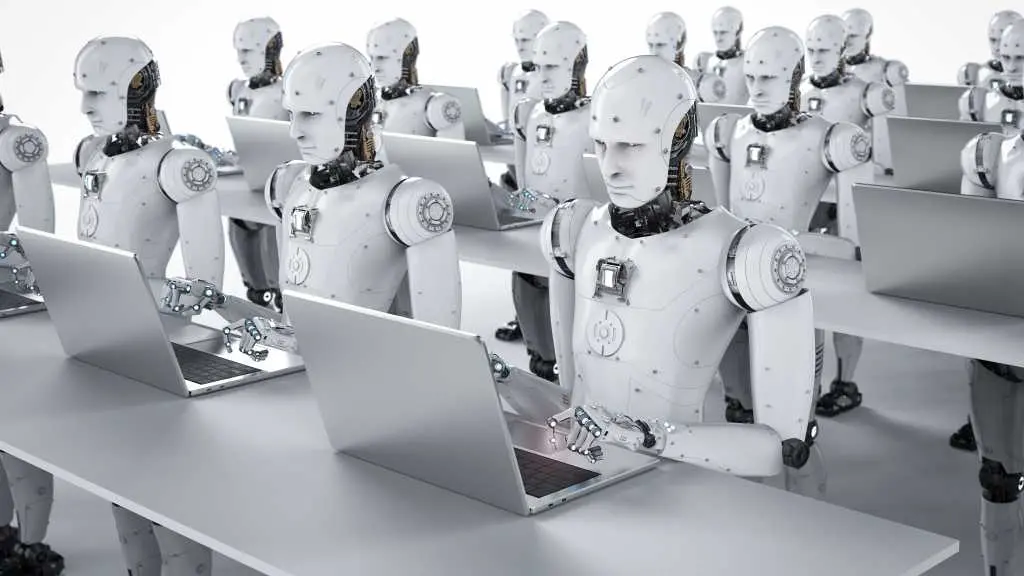
Open source software has long been romanticized as a vibrant bazaar where thousands of contributors freely collaborate. Yet the reality has always been more modest: most critical libraries are maintained by a tiny core of unpaid volunteers. Now large language models and AI coding agents are tearing down the barriers that once kept this fragile ecosystem in balance. The result is not a more inclusive community but a tide of machine-generated slop that threatens to drown maintainers.
Mitchell Hashimoto, founder of HashiCorp and a pillar of the open source world, recently announced he is considering closing external pull requests entirely. His reason is not disillusionment with open source but a deluge of low-effort contributions generated by AI agents. These pull requests look plausible on the surface but lack the deep context and trade-off awareness that a human maintainer provides. Flask creator Armin Ronacher calls this phenomenon "agent psychosis", describing developers addicted to the dopamine rush of spawning agents that run wild through codebases, producing what he terms vibe-slop: code that feels right because a statistical model generated it but ignores the historical understanding essential for long-term project health.
The problem is accelerating. As SemiAnalysis points out, we have moved past simple chat interfaces into agentic tools that live in the terminal, such as Claude Code. These agents can research a codebase, execute commands, and submit pull requests autonomously. For a developer working on their own project, this is a huge productivity win. For a maintainer of a popular repository, it is a nightmare. The cost to produce a plausible patch has collapsed, but the cost to responsibly merge it has not. This asymmetry is the economic engine driving the shift: a developer spends sixty seconds prompting an agent to fix typos and optimize loops across a dozen files; a maintainer spends an hour reviewing those changes, verifying edge cases, and ensuring alignment with the project’s long-term vision. Multiply that by a hundred contributors all using personal AI assistants, and maintainership becomes unsustainable.
The cost of contribution
The economics of review have always been harsh, but AI makes them toxic. In the past, finding a bug and submitting a fix was a human transaction, a way of saying thank you. Now that transaction is automated, and the thank you is replaced by a mountain of digital noise. The OCaml community recently dealt with an AI-generated pull request exceeding 13,000 lines of code. Maintainers rejected it on grounds of copyright concerns, lack of review resources, and the long-term maintenance burden. One maintainer warned that such submissions risk bringing the entire pull request system to a halt. Even GitHub is feeling the strain: as InfoWorld reported, GitHub is exploring tighter pull request controls and UI-level deletion options because maintainers are overwhelmed by AI-generated submissions. The host of the world’s largest code forge considering a kill switch for pull requests indicates a structural shift, not a niche annoyance.
Small open source projects are hit hardest. Nolan Lawson, author of the blob-util library with millions of downloads, argues that the era of low-value utility libraries is over. Why install a dependency when you can ask Claude or GPT-5 to write a perfectly serviceable utility function in milliseconds? The incentive to maintain a dedicated library vanishes when an LLM can generate the code on command. But something deeper is lost: these libraries were educational tools where developers learned by reading others' work. When we replace them with ephemeral AI snippets, we trade understanding for instant answers.
This leads to a provocation from Ronacher: build it yourself. If pulling in a dependency means dealing with constant churn, the logical response is to retreat, to keep code inside your own walls and use AI to help you do so. This creates a weird irony: AI reduces demand for small libraries while simultaneously increasing the volume of low-quality contributions to the libraries that remain. The only thing that remains scarce is human judgment, the ability to say no.
The future of open source
So if open source is not primarily powered by mass contribution, what happens when the contribution channel becomes hostile to maintainers? The answer is likely bifurcation. On one side, massive enterprise-backed projects like Linux or Kubernetes have the resources to build AI-filtering tools and ignore the noise. These are the cathedrals, guarded by sophisticated gates. On the other side, provincial projects run by individuals or small cores simply stop accepting external contributions. The irony is that AI was supposed to make open source more accessible, and it has, but in lowering the barrier it has also lowered the value. When everyone can contribute, no one’s contribution is special.
Open source is not dying, but the word "open" is being redefined. We are moving away from radical transparency, from "anyone can contribute", toward radical curation. The future belongs to the few, not the many. The community was always something of a lie, but AI has made the lie unsustainable. The era of the drive-by contributor is replaced by the era of the verified human. The most successful open source projects will be the ones that are hardest to contribute to, demanding high levels of human effort, context, and relationship. They will reject slop loops and agentic psychosis in favor of slow, deliberate development. The bazaar was a fun idea while it lasted, but it could not survive the arrival of the robots. The future of open source is smaller, quieter, and much more exclusive, and that might be the only way it survives. We do not need more code; we need more care for the humans who shepherd communities and create code that endures beyond a simple prompt.
Source: InfoWorld News