

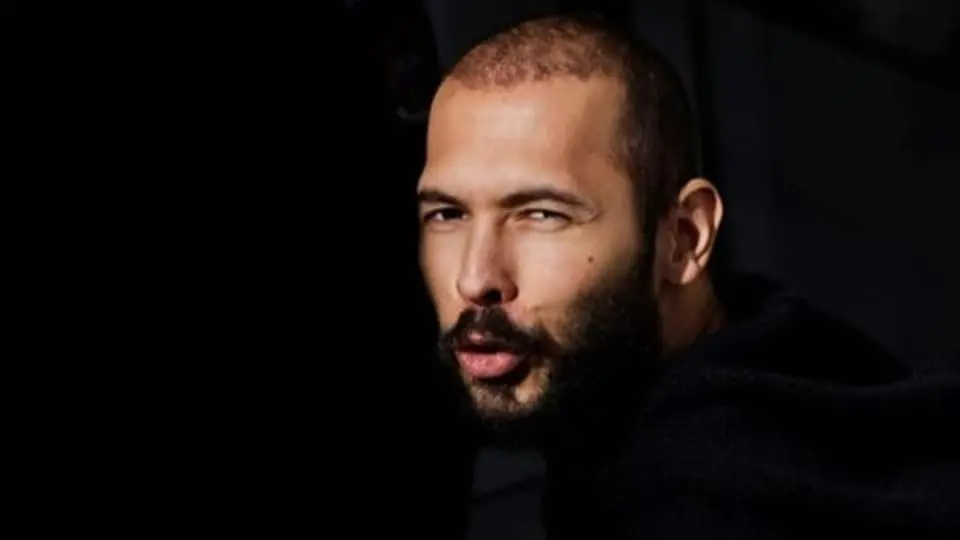
Who Is Andrew Tate?
Andrew Tate, a 36-year-old British-American former kickboxer, has become one of the most polarizing figures on social media. He gained fame through his self-proclaimed 'hustler' lifestyle, posing with luxury cars, cigars, and making inflammatory statements about women. Tate’s journey from professional athlete to internet celebrity is marked by a series of controversies that have both boosted his fame and led to widespread condemnation.
Born in Washington, D.C. and raised in Luton, England, Tate started his career in kickboxing, winning multiple world titles. After retiring from sports, he transitioned to entrepreneurship and online influence. He launched a webcam business and a paid subscription service offering advice on wealth and masculinity. His content, which often revolves around traditional gender roles, wealth accumulation, and rejection of mainstream societal norms, has garnered millions of followers across platforms like YouTube, TikTok, and Instagram.
Tate’s rise to global prominence, however, is closely tied to his legal troubles. In December 2022, he was arrested in Romania, along with his brother Tristan and two associates, on charges of human trafficking and forming an organized criminal group. The allegations involve luring women into relationships and coercing them into forced labor and prostitution. As of early 2023, he remains in pre-trial detention while Romanian authorities investigate.
Despite these serious accusations, Tate’s popularity, especially among young men, continues to grow. This phenomenon has puzzled educators, parents, and policymakers, leading to discussions about the appeal of misogyny in a supposedly progressive era.
The Appeal of Andrew Tate
What draws young men to a figure like Andrew Tate? According to Daniel Gebauer, a teacher at a secondary school in the canton of Bern, Switzerland, the answer lies in a combination of rebellion and the search for identity. In his own classes, Gebauer found that nearly half of his male students recognized Tate’s name. While the students could list the controversies—misogyny, homophobia, racism—many still expressed a certain admiration for his unapologetic demeanor.
Gebauer notes that young men today are caught between traditional expectations and new social norms. The pressure to be sensitive, inclusive, and emotionally open can feel contradictory to the age-old ideals of strength and assertiveness. Tate offers a simplified, black-and-white view of masculinity: be dominant, avoid weakness, and pursue wealth at all costs. This message resonates with those who feel disenfranchised or confused by modern discourse.
Furthermore, the element of taboo plays a significant role. Tate’s statements are frequently banned or shadow-banned by platforms, making them seem like forbidden fruit. The more the mainstream media criticizes him, the more his followers see him as a truth-teller fighting against a corrupt system. This dynamic is reminiscent of provocative influencers from earlier eras, but Tate’s use of viral clips and memes amplifies his reach exponentially.
Reactions in Schools and Society
While the impact of Andrew Tate is most visible in the United Kingdom, where some schools have launched coordinated counter-campaigns, the situation in Swiss classrooms is more nuanced. The Swiss Teachers’ Association (LCH) says it currently sees no need for widespread initiatives, but remains vigilant. Individual educators like Gebauer, however, have taken proactive steps.
When Gebauer brought up Tate in class, he was surprised by the instant recognition. The discussion revealed that students, especially boys, are intrigued by his lifestyle but also capable of critical thought. “They know he is controversial, they know the accusations against him, and they can separate the public opinion from their own curiosity,” Gebauer explained. Still, he suspects that some students hide their genuine admiration out of fear of social backlash.
This tension highlights a broader issue: the gap between what society expects from young men and what they actually believe. Many boys feel under constant scrutiny, being told what they can and cannot say or think. In this context, Tate’s defiance becomes a symbol of resistance. Gebauer argues that simply banning or ignoring these influences is ineffective; instead, educators should strive to understand the underlying needs and offer more compelling alternatives.
Masculinity in Transition
The fascination with Andrew Tate cannot be understood without examining the shifting landscape of masculinity. Traditional male roles, once centered on breadwinning and stoicism, have been partially replaced by ideals of vulnerability, equality, and emotional intelligence. While many celebrate this evolution, others perceive it as a loss of identity. Young men, in particular, may feel that they are no longer allowed to be 'real men.'
Studies have shown that boys often suffer from a lack of positive male role models. In many Western countries, father absence is high, and schools are increasingly female-dominated environments. Figures like Tate fill the void by offering a clear, albeit toxic, blueprint. He tells his audience that they are victims of a feminist conspiracy and that reclaiming power is their birthright. This narrative is especially potent among those who feel left behind by economic and social changes.
Psychologists and youth workers warn that these ideas, if left unchallenged, can lead to real-world harm. Cases of domestic violence, sexual harassment, and extremism have been linked to the spread of misogynistic content online. However, approaches that solely condemn or censor may backfire, driving impressionable minds deeper into the rabbit hole.
Gebauer advocates for a more dialogic approach. “We need to make an effort to understand young people, not dismiss their interests outright,” he says. By engaging students in respectful debate, teachers can help them deconstruct extremist views while still validating their search for identity. This method, though time-consuming, offers a sustainable way to inoculate youth against harmful ideologies.
Broader Cultural and Legal Context
Andrew Tate’s case also sheds light on the legal and cultural responses to online misogyny. His arrest in Romania was a notable example of law enforcement acting against alleged crimes that began in the digital space. The investigation involved raids on his compound in Bucharest, where authorities seized luxury vehicles, cash, and digital evidence. The media coverage was intense, yet it paradoxically increased his visibility.
In the UK, the government has considered legislation to hold social media platforms accountable for harmful content. But definitions of harm remain contested. Some argue that figures like Tate exploit free speech to incite hatred, while others defend their right to express unpopular opinions. This debate is not new, but the scale of Tate’s influence makes it urgent.
Meanwhile, in Switzerland, the federal government has taken a more measured approach. Rather than direct intervention, authorities rely on education and media literacy programs. The Federal Office of Police (fedpol) monitors extremist content but prioritizes prevention through schools. The lack of a unified European strategy means that countries like Switzerland are likely to continue a cautious, case-by-case policy.
What Can Educators Do?
Given the complexity of the issue, there is no one-size-fits-all solution. However, several strategies have proven effective. First, teachers must stay informed about online trends and the influencers their students follow. Second, they should foster classroom environments where controversial topics can be discussed openly without judgment. Third, incorporating critical thinking exercises about media consumption and persuasive techniques can help students recognize manipulation.
Parents also play a crucial role. Many are unaware of the full extent of Tate’s content or the algorithms that push it to boys. Workshops and information sessions for parents can bridge this knowledge gap. Additionally, providing young men with positive, diverse role models in schools and communities—through mentorship programs, sports coaching, or guest speakers—can offer alternative paths to self-esteem.
Finally, the conversation must be ongoing. As new influencers emerge and platforms evolve, educators will need to adapt. The key is to remain curious and empathetic, rather than reactive and punitive. As Daniel Gebauer concludes, “We can’t just say ‘that’s bad’ and move on. We must understand why they find it appealing, and then offer something better.”