

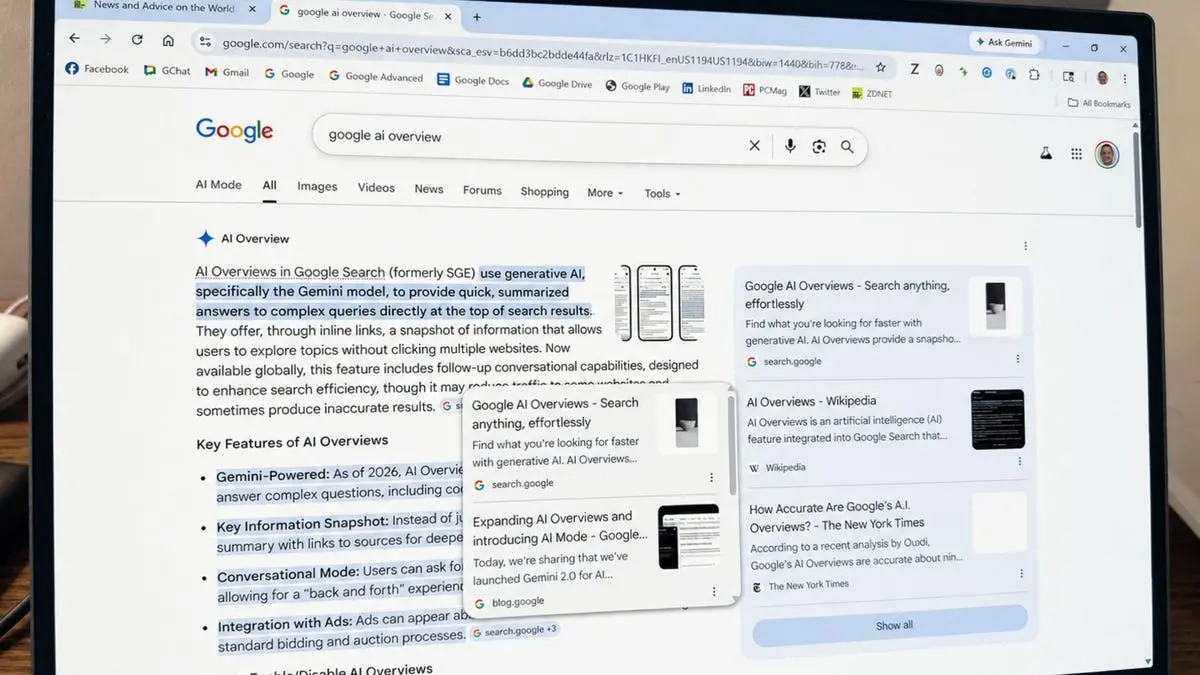
Google is updating its AI Overviews with five new features designed to provide more depth and transparency in search results. The improvements focus on better integration of human expertise, easier access to trusted news sources, and clearer attribution of information within the summaries themselves.
1. View advice from other people
The most notable addition is the inclusion of expert advice from other people directly within AI Overviews. When a user asks a question that benefits from personal experience or community knowledge, such as 'How do I take photos of the northern lights?' or 'What's the best diet for a cat with a sensitive stomach?', the overview may now display a section called 'Expert Advice' containing brief remarks from discussion forums, social media posts, and other online communities. Each remark includes the name of the person or forum and a clickable link to the full discussion, allowing users to read more context or join the conversation. This feature aims to bridge the gap between automated summaries and real-world, lived experiences that are often shared in niche online communities.
2. Access your news subscriptions
For users who subscribe to specific news sources, Google is making it easier to find those articles within AI Overviews. The feature highlights links to a publisher's content directly in the summary, and when a user hovers over or clicks the link, they are taken to the full story behind the paywall. Early tests reportedly showed that users were significantly more likely to click on links labeled as belonging to their subscriptions. Publishers can opt into this functionality via Google's Subscription Linking page, allowing their subscribers to access premium content directly from the AI summary. This move acknowledges the importance of quality journalism and aims to support subscription-based business models.
3. See links to the sources in the summary
One of the biggest criticisms of AI-generated summaries is the difficulty in verifying the information. To address this, Google is now placing source links directly inline with the relevant text within the AI Overview. For example, if the summary mentions 'terrain challenges on a California bike tour,' a link to a specific Pacific Coast bike touring guide will be placed next to that phrase. Similarly, a bullet point about daily mileage might include a link to a blog post on training for long-distance rides. This makes it much easier for users to fact-check or dive deeper into specific claims, enhancing trust and credibility.
4. Explore additional sources
Beyond the immediate sources used to generate the summary, Google is adding a new section that appears below the AI Overview with suggestions for other relevant websites. This section contains links to articles, case studies, or analyses that cover different angles of the same topic. For instance, a search about urban green spaces might surface a case study on Seoul's stream restoration projects or an architectural review of New York City's High Line park. This feature encourages users to explore a broader range of perspectives and find more specialized content beyond the main summary.
5. Preview linked websites in the summary
Finally, Google is introducing hover previews for all links included in the AI Overview. When a user hovers their mouse over a link, a small pop-up shows the name or title of the destination website, helping them decide whether to click through. This reduces the uncertainty of clicking an unknown link and can improve the user experience, especially for those who are hesitant to leave the search results page. The preview is designed to make users more comfortable visiting the sources behind the summary.
Background and context
AI Overviews were first launched as part of Google's Search Generative Experience in 2024, offering users AI-generated summaries that pull from multiple web sources. However, early versions faced criticism for occasional inaccuracies, lack of source attribution, and a tendency to aggregate information without clear vetting. These updates directly address those issues by making the sources more visible, adding human voices, and providing pathways to deeper exploration.
The changes also reflect a broader industry trend toward integrating AI with human-generated content. As large language models become more common in search, the need for transparent sourcing and community input has grown. Companies like Perplexity and Microsoft's Bing have also introduced similar features, but Google's massive user base and index of web content give its implementation unique reach.
From a technical perspective, these upgrades rely on improved query fan-out techniques that allow the AI to explore a wider variety of web sources, including forums and subscription-based sites. The result is a more comprehensive set of references that can satisfy diverse user intents. For example, a question about home gardening might pull from a Reddit discussion on pest control, a gardening magazine article, and a university extension service report—all within the same summary.
Implications for users and publishers
For users, the new features mean less time clicking back and forth between tabs and more confidence in the information presented. The inline source links and expert advice sections reduce the friction of fact-checking, while the subscription linking ensures that loyal readers can easily access paywalled content they already own.
For publishers, the changes could lead to higher click-through rates from AI Overviews, especially for those who enable subscription linking. Additionally, featuring content from forums and social media may help smaller communities and independent experts gain visibility. However, it also raises questions about how content is ranked and whether all sources are treated fairly. Google has stated that it continues to refine its ranking algorithms to prioritize authoritative and relevant content, and that these updates are part of ongoing efforts to 'build AI in Search to help you discover the richness of the web.'
As AI search evolves, the balance between automation and human input will remain a key challenge. By incorporating advice from real people and making source attribution more transparent, Google's latest update represents a significant step toward a more useful and trustworthy search experience. The rollout is expected to begin this month for English-language queries in the United States, with broader availability later in the year.
Source: ZDNET News